Lent: Trust, Restoration, and Grace
Click here for the readings for - Lent: Trust, Restoration, and GraceLent: Trust, Restoration, and Grace
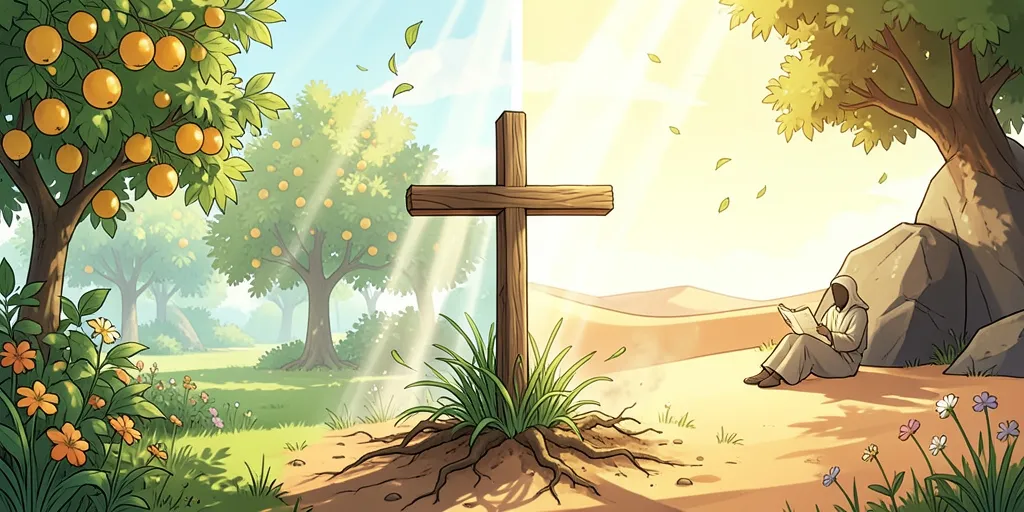
Lent begins not with a sprint but with a step into the quiet; a deliberate turn from the noise that keeps us from hearing ourselves and from hearing God. The readings for the First Sunday of Lent invite a hard but liberating honesty: the world is not as it should be, nor are we; yet the grace of God in Christ is far greater than the old gravity of sin. If the garden shows where trust was fractured and the desert shows where trust is restored, then Lent is the season that lets that restoration reach all the way into our habits, our wounds, and our choices.
The Breath and the Bite
Genesis tells humanity’s origin with striking tenderness: formed from dust, animated by the breath of God, placed in a garden with everything good and beautiful. The first temptation doesn’t begin with a violent act; it begins with a suggestion that God might be holding back, that divine love is stingy, that wisdom must be seized rather than received. The fruit looks nourishing, beautiful, and “desirable for gaining wisdom.” Temptation often dresses itself in half-truths: nutritional value, aesthetic appeal, intellectual growth; what could be wrong? The twisting happens in the timing and the trust. Instead of receiving from God as gift, we grasp on our own terms.
Then comes the familiar aftermath: eyes opened, shame discovered, fig leaves sewn. In our time, fig leaves look like the curated image, the relentless productivity, the sarcasm that keeps vulnerability at bay, the busyness that protects us from silence. We cover what feels fragile, hoping that self-made coverings can secure what trust once gave freely.
Lent does not shame our hunger for wisdom or beauty; it reorders desire through trust. The garden is not an anti-intellectual fable; it is a diagnosis of disordered relationality. When communion with God wobbles, even good desires can wobble with it. Honest fasting and prayer give the heart space to notice not only what we want but why we want it; and to receive afresh the breath of God that makes us truly alive.
The Weight and the Gift
Paul’s letter to the Romans meets us where many modern people live: inside systems and histories larger than our personal choices. “Through one man sin entered the world… and death reigned.” Original Sin is not merely a private failing; it is an atmosphere; a spiritual smog that stings the eyes and constricts the lungs. The human story carries fractures we did not choose but do participate in: fear that breeds control, envy that breeds competition, shame that breeds hiding.
But then Paul dares the scandalous comparison: “The gift is not like the transgression.” If Adam’s disobedience feels like gravity, Christ’s obedience introduces a counter-gravity, stronger and more spacious. The condemnation that followed one trespass shows the world’s bent; the acquittal that follows “many transgressions” shows the world’s true horizon in Christ. Justification is more than a legal pardon; it is a new share in divine life; breath restored, communion reopened.
For those who feel stuck in patterns they hate and systems they cannot singlehandedly fix, this is not optimism; it is hope. Optimism presumes favorable trends; hope trusts a faithful God who can raise the dead and make deserts bloom. Lent places us under this gift; under mercy’s steady rain; so that righteousness is not a performance but a participation in Christ’s own obedience.
The Wilderness and the Word
Jesus is led by the Spirit into the desert. He is not avoiding hunger, obscurity, or powerlessness; He is allowing those places to be the theater of victory. Every temptation He faces is recognizable in modern life:
- Stones to bread: Turn need into entitlement; make comfort the ultimate good. In a world of instant gratification, we are catechized to solve every ache with a click.
- Leap from the Temple: Spectacle and self-proof. Make God serve your brand. “If you are beloved, show it. Make it viral.” Metrics replace meaning.
- Kingdoms and their glory: Control outcomes at the price of worship. Bow just a little to the idols of power, and you can do so much good.
Jesus answers each with Scripture; not as magic words but as a lived allegiance. He quotes Deuteronomy, the book that formed Israel’s wilderness heart, and He refuses to make the Father useful. The Son’s hunger stays real; He will trust timing and providence. He will not jump to force God’s hand. He will not negotiate with the powers to get a shortcut to a good end. He will worship God alone and, by that obedience, refound humanity.
There is a subtle lesson in the order: identity precedes activity. “If you are the Son of God…” mocks our deepest reliance. Lent says, rest your identity in the Father’s voice before you act, perform, or achieve. Only then can fasting be freedom and not self-punishment; only then can service be love and not self-justification.
Practices for a Real Lent
Grace is primary, but our cooperation matters. The Church offers three sturdy ways to practice trust.
- Prayer: Commit to a daily time that is quiet and unproductive by design. Five to fifteen minutes of Scripture (the Sunday Gospel all week long), slow breathing, and a simple surrender: “Speak, Lord. I am listening.” Consider memorizing one verse Jesus uses today: “You shall worship the Lord your God; Him alone shall you serve.”
- Fasting: Choose a fast that touches your false securities. Food is classic; so is noise. Try: no screens for the first hour of the day; no snacking between meals; no shopping for non-essentials; one day weekly with a “news fast,” replaced by intercession for the world’s suffering. Let the experience of want drive you to prayer, not to resentment.
- Almsgiving: Let generosity repair what selfishness has bent. Give in a way you will feel; time, attention, and money. Direct some alms to someone whose need is invisible in your social circle: a single parent, a neighbor between jobs, a refugee family, a local shelter. Tie your giving to a concrete relinquishment: what you don’t buy becomes what someone else needs.
Add one sacramental step: make a plan for Reconciliation before Holy Week. Psalm 51 is the Church’s voice: “Create in me a clean heart.” Confession is not spiritual accounting; it is oxygen for the soul.
Mercy That Makes New
Temporal strategies alone cannot mend the heart. Psalm 51 does something deeper than listing failures; it returns to relationship. “Against you only have I sinned” sounds strange until we realize that sin is not breakage of an abstract rule but a wound in a communion. The psalmist asks not merely for pardon but for a new interior; “a steadfast spirit,” joy restored, lips opened in praise. Lent asks for nothing less than this re-creation.
Notice, too, the Gospel’s closing tenderness: after the devil departs, “angels came and ministered to him.” Obedience does not end in desolation. God does not leave fidelity unfed. For many, the first week of Lent brings zeal’s adrenaline; the second brings fatigue. This line is a promise: consolation is real, timed by God, not by our scheduling apps. Keep watch. The angels are not imaginary; grace is often quiet but utterly concrete.
Living Between the Trees
The garden held two trees: life and the knowledge of good and evil. At Calvary, Christ stands upon the wood that becomes the new Tree of Life. The first Adam reached to be “like gods”; the new Adam empties Himself, and in that self-gift makes us truly share in divine life. Lent moves us from the grasp of the first tree to the gift of the second.
In a culture of scarcity narratives, Jesus teaches abundance through trust. In a culture of spectacle, He teaches hidden faithfulness. In a culture that baptizes domination as effectiveness, He teaches worship as the only safe power. Step into the quiet. Let hunger tell the truth. Let the Word be enough. Then act; simply, mercifully, steadfastly; knowing that the gift is not like the transgression, and that grace is already at work remaking the world, starting with the heart God is purifying in you.